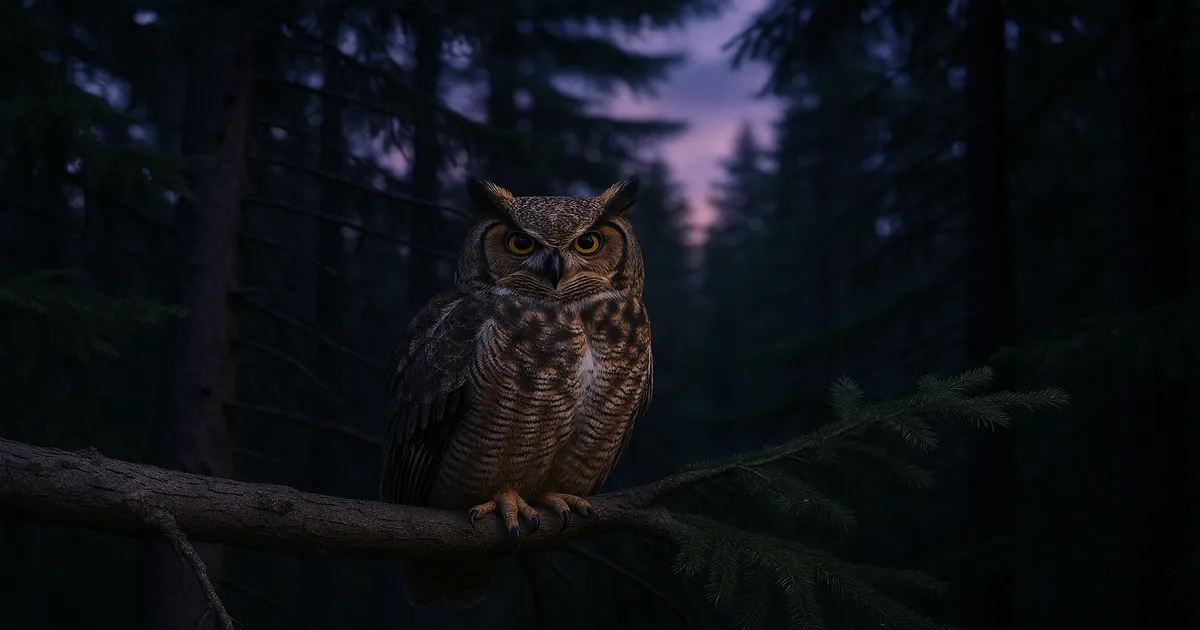
Quick Answer: If you heard a deep hooting sound at night, it’s most likely a Great Horned Owl (Bubo virginianus) or Barred Owl (Strix varia). A descending whinny or long trill is probably an Eastern Screech-Owl (Megascops asio). That nasal buzzing sound overhead at dusk? Almost certainly not an owl at all — it’s a Common Nighthawk.
If you’ve ever typed “what is this bird sound owl?” into a search bar at 11 p.m., you’re in good company. Owl calls are some of the most commonly heard and least-recognized sounds in North American backyards and forests. This guide breaks down exactly what you’re hearing — and, just as usefully, what you’re probably not hearing.
What Is This Bird Sound? The Five Most Likely Owls (and One Impostor)
Here’s a fast-reference list of the species most people are actually hearing:
- Great Horned Owl — Deep, rhythmic hooting: “Hoo-hoo-hoooo, hoo-hoo”
- Barred Owl — Loud 8-note hoot: “Who cooks for you? Who cooks for you-all?”
- Eastern Screech-Owl — A trembling descending whinny, or a long mournful trill (not a screech)
- Northern Saw-whet Owl (Aegolius acadicus) — Monotonous, repetitive tooting: “Too-too-too-too”
- Common Nighthawk (Chordeiles minor) — A loud, nasal, buzzy “PEENT” from high overhead — not an owl, but endlessly mistaken for one
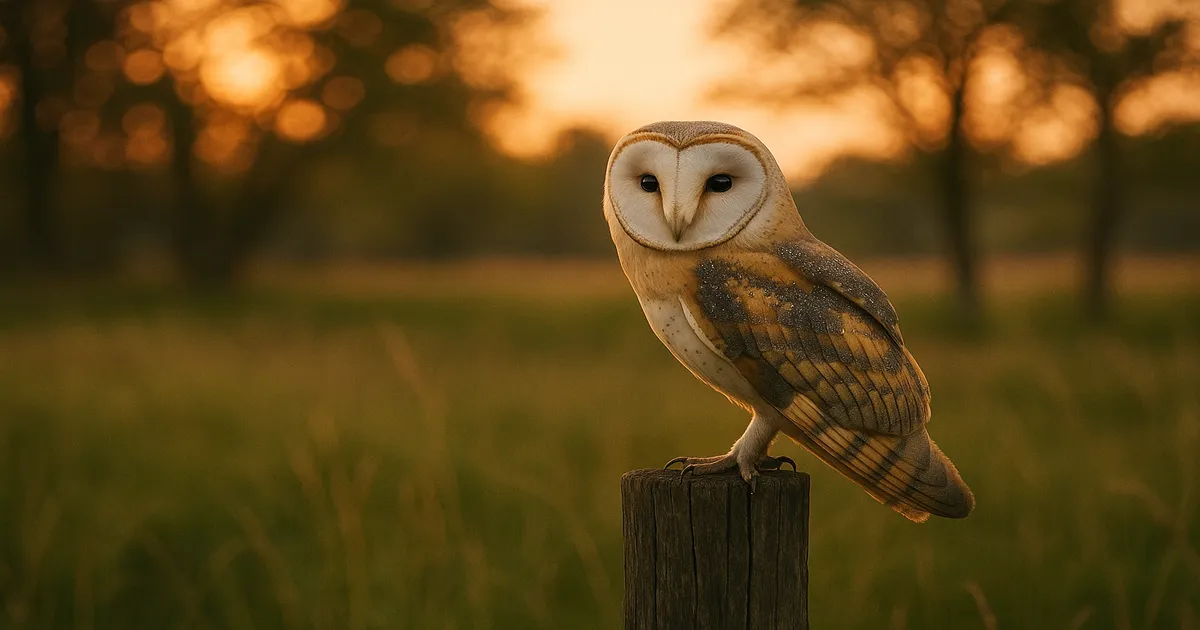
One more surprise: the Barn Owl (Tyto alba) doesn’t hoot at all. It produces a long, raspy shriek that most people describe as terrifying. First-time listeners rarely guess “bird.”
Owl Sound Identification: A Species-by-Species Breakdown
Great Horned Owl: The Classic Deep Hoot
The Great Horned Owl is what most people picture when they think “owl sound.” Its call is a slow, deep, resonant hoot — typically four to five syllables with a distinctive rhythm. A useful mnemonic is “Who’s awake? Me too.” The spacing between notes is even and unhurried, which helps separate it from the Barred Owl.
Males and females often duet, and the female’s voice is noticeably higher-pitched than the male’s — something that surprises a lot of people the first time they hear it. Great Horneds are most vocal from October through March, when courtship and territorial activity peak, but they can call any time of year.
Barred Owl: “Who Cooks for You?”
Once you learn the Barred Owl’s call, you’ll hear it everywhere in eastern forests. The classic rendition is “Who cooks for you? Who cooks for you-all?” — eight notes with a downward slur at the end of the phrase.
What catches people off guard is the secondary vocalization: a wild, cackling, almost monkey-like series of hoots and gurgles that mated pairs produce together. I’ve heard this duet startle experienced birders who’d never encountered it before. The Barred Owl is also unusually willing to call during daylight, so don’t assume a daytime hoot rules it out.
Eastern Screech-Owl: Whinnies and Trills, Not Screeches
Despite the name, the Eastern Screech-Owl almost never screeches. Its two main calls are a descending whinny — a wavering, horse-like sound that drops in pitch over about two seconds — and a long, single-pitch trill lasting three to six seconds. The trill is one of the most commonly heard suburban owl sounds in the eastern U.S., and most people have no idea what’s making it.
If you’re hearing something that sounds like a tiny, mournful horse in your backyard trees, that’s your bird.
Northern Saw-whet Owl: The Repetitive Tooting Nobody Recognizes
The Saw-whet’s advertising call is a single whistled note — “too” — repeated relentlessly at about two notes per second, sometimes for hours. It’s surprisingly loud for such a small bird. People who hear it for the first time often think it’s a mechanical sound, a distant alarm, or some kind of frog.
This is one of the most overlooked owl sounds in North America, partly because the bird itself is so small and secretive. If you’re hearing a monotonous, high-pitched tooting from a conifer stand in late winter or spring, open Merlin Bird ID on your phone and let the Sound ID feature confirm it.
Barn Owl: The Scream That Sounds Like a Ghost
The Barn Owl doesn’t hoot. Its call is a long, harsh, rasping shriek — somewhere between a hiss and a scream — that carries well across open farmland at night. It’s one of the most frequently reported “ghost sounds” online, and honestly, I understand why.
If you heard something that made the hair on your arms stand up, and you’re near open farmland or an old barn, Barn Owl is a real possibility. The species has declined significantly across much of North America due to habitat loss and rodenticide use, so a confirmed sighting is worth reporting to your local atlas project.
What Is This Bird Sound Overhead? The Common Nighthawk
Why People Mistake the Nighthawk for an Owl
The Common Nighthawk is crepuscular and cryptically patterned, which already puts it in “mysterious night creature” territory. But what really drives the confusion is its “PEENT” call — loud, nasal, and buzzy, carrying a long distance and seeming to come from nowhere in particular. Nighthawks call from high overhead in open sky, which makes them hard to locate visually.
In cities and suburbs at dusk, they’re genuinely common. They hawk insects over streetlights and open lots, calling constantly. Many urban residents hear them every summer evening without ever knowing what they are.
The male also performs a booming wing-dive display at dusk — he plummets toward the ground and pulls up sharply, producing a deep “whooom” with his wingtips. That one really throws people.
How to Tell a Nighthawk Call from an Owl Call
- Owl calls are hooting, whistling, or shrieking — musical or haunting in quality
- Nighthawk calls are buzzy and nasal, like a loud electric “bzeet” — nothing melodic about it
- Owls call from trees or fixed perches; the sound comes from one spot
- Nighthawks call while flying; the sound moves or seems to come from open sky
Field Marks: What to Look For If You Caught a Glimpse
Great Horned Owl
Big bird — 18 to 25 inches (46–63 cm) long, wingspan up to 57 inches (145 cm). The widely spaced feather tufts (“horns”) are the most distinctive feature. Eyes are bright yellow, and there’s a white throat patch visible at close range. Females are noticeably larger than males, as with all owls on this list.
A good pair of binoculars makes a real difference for picking out field marks at night. (Nikon Monarch M5 8x42) Even modest magnification helps you confirm that white throat patch or the spacing of the ear tufts.
Barred Owl
The only large eastern owl with dark brown eyes — every other species has yellow. Round-headed with no ear tufts, brown-and-white patterned, with horizontal barring across the upper chest. If you see a big, dark-eyed owl in an eastern forest, it’s a Barred.
Eastern Screech-Owl
At 6.3 to 9.8 inches (16–25 cm) long, this bird is small enough to disappear completely against tree bark — which is exactly what it’s designed to do. Two color morphs exist: rufous (reddish-brown) and gray. Both are intricately streaked and nearly impossible to spot when roosting in a tree cavity. Small ear tufts are present but often flattened.
Screech-owls readily use nest boxes, and putting one up in a yard with mature trees is a reliable way to attract them. Face the entrance hole away from prevailing weather and mount it 10 to 30 feet up.
Northern Saw-whet Owl
Robin-sized, weighing as little as 2.3 ounces (65 g), with a head that looks almost comically large for its body. Brown above with white spots, white below with reddish-brown streaking, and bright yellow eyes. No ear tufts. If you find one roosting in a dense conifer in winter, it may let you approach surprisingly close — they rely on camouflage rather than flight.
Barn Owl
Unmistakable if you see it: white to pale golden below, tawny and gray above, with a pure white heart-shaped facial disc. In flight at night, it looks ghostly pale. No other North American owl comes close.
Quick size comparison:
| Species | Length |
|---|---|
| Great Horned Owl | 18–25 in (46–63 cm) |
| Barred Owl | 16–25 in (40–63 cm) |
| Barn Owl | 12.6–15.8 in (32–40 cm) |
| Northern Saw-whet Owl | 7–8.5 in (17–21 cm) |
| Eastern Screech-Owl | 6.3–9.8 in (16–25 cm) |
Where and When to Hear Owls
Great Horned Owl: Everywhere
The Great Horned Owl breeds from the Arctic tree line south through Central America and occupies virtually every habitat in between — forests, deserts, suburban parks, agricultural land. If there are large trees or cliff ledges, there’s a chance one is around. This is the owl most people are most likely to hear, wherever they live.
Courtship begins in November and December. Eggs are laid in January or February — sometimes in snow — making the Great Horned the earliest nesting bird in North America. They take over old hawk or crow nests rather than building their own, and early nesting gives their slow-developing young a head start before the following winter.
Barred Owl: Eastern Forests and Expanding West
A bird of dense, mature eastern forest — especially bottomland hardwoods and swampy woodland near water. Its range has expanded dramatically westward since the mid-20th century, and it’s now established across the Pacific Northwest, where it’s outcompeting the federally threatened Spotted Owl (Strix occidentalis). If you’re in the Pacific Northwest and hearing “Who cooks for you?”, that’s almost certainly a Barred Owl.
Eastern vs. Western Screech-Owl
The Rocky Mountains are the dividing line. East of the Rockies: Eastern Screech-Owl. West of the Rockies: Western Screech-Owl (Megascops kennicottii), found from British Columbia south through Baja California. The two species look nearly identical but have different calls, so range is your first clue. Both adapt well to suburban neighborhoods with mature trees.
Northern Saw-whet Owl: Conifers and Surprising Winter Wanderers
Saw-whets breed in coniferous and mixed forest across southern Canada and the northern U.S., including the Appalachians and western mountain ranges. In winter they’re irruptive migrants — moving south and east in varying numbers depending on prey availability. They turn up in suburban areas and city parks far more often than most people realize, and they’re easy to miss because they roost motionless during the day.
Common Nighthawk: Open Skies Over Cities and Grasslands
The Common Nighthawk breeds across most of North America and winters in South America. It favors open environments — cities, suburbs, grasslands, desert — and is one of the more common birds over urban areas at dusk in summer. In late summer, nighthawks form large migratory flocks moving south in the evening sky. Worth watching for.
Tips for Identifying Owl Sounds in the Field
Use Merlin Bird ID
Merlin Bird ID from the Cornell Lab of Ornithology is the best free tool for this. Its Sound ID feature listens in real time and identifies birds as they call — open it on your phone, point it toward the sound, and within seconds you’ll have a likely candidate with a spectrogram to look at. It’s not perfect, but it’s right far more often than not, and it’s free.
Download it before you need it. Having it ready at 10 p.m. when something starts calling outside your window beats fumbling with an install in the dark.
How to Describe a Bird Sound Without a Recording
- Pitch: High, medium, or low?
- Rhythm: Repetitive and steady, or varied and irregular?
- Quality: Hooting, buzzing, whistling, screeching?
- Duration: A quick note, a long phrase, or continuous?
- Location: From a tree, or from overhead in open sky?
That last point matters more than people think. A sound coming from high overhead in open air points strongly toward Common Nighthawk rather than any owl.
Best Times to Listen
The two best windows are the first two hours after sunset and the 45 minutes before sunrise. Calm, clear nights with low wind are ideal — wind noise masks distant calls significantly. A good field guide kept handy helps you cross-reference what you’re hearing against range maps and seasonal calendars. (Sibley’s Birds of North America) Cold winter nights from December through February are prime for Great Horned Owls. Spring nights in March through May are best for Screech-Owls and Saw-whets.
Don’t Abuse Playback
Playing recorded calls to attract owls can work, but it causes real stress — owls respond because they interpret it as a territorial intruder. Near a known nest site, repeated playback can disrupt foraging and, in the worst cases, cause nest abandonment. A brief listen to confirm a species is very different from running calls for twenty minutes hoping for a better look. Keep it short, keep it infrequent.
Frequently Asked Questions About Owl Sounds
What owl makes a sound like “Who cooks for you?”
That’s the Barred Owl. Its full call is typically rendered as “Who cooks for you? Who cooks for you-all?” — eight hooted notes with a distinctive downward slur at the end of the second phrase. It’s the most commonly heard owl in eastern North American forests and will sometimes call in broad daylight.
What bird makes a repetitive tooting sound at night?
Almost certainly a Northern Saw-whet Owl. Its advertising call is a single whistled note — “too” — repeated steadily at about two notes per second, sometimes for extended periods. Many people mistake it for a mechanical sound or a frog. Most commonly heard in late winter and spring from coniferous or mixed forest.
What is the screaming sound in the woods at night — is it an owl?
It might be. The Barn Owl produces a long, rasping shriek rather than a hoot, and it’s one of the most commonly reported mystery screams in rural areas near open farmland. Red Foxes (Vulpes vulpes) also produce a startling scream that gets blamed on owls regularly. If the sound was a sustained, harsh hiss-shriek near an old barn or open field, Barn Owl is a strong candidate.
What is that buzzing sound overhead at dusk — is it an owl?
No. A loud, nasal “PEENT” or buzzy “bzeet” coming from high overhead at dusk is almost certainly a Common Nighthawk, not an owl. Nighthawks are common over cities and suburbs in summer and call constantly while hunting insects in flight. The male also makes a booming “whooom” sound during his diving display — that one surprises almost everyone the first time.
How do I attract owls to my yard?
The most reliable method is putting up a nest box sized for your target species. Eastern Screech-Owls and Northern Saw-whet Owls both use boxes readily. Place it in a yard with mature trees, away from heavy foot traffic, and leave the surrounding area as natural as possible. Avoid rodenticides — owls that eat poisoned rodents accumulate the toxins and can die as a result.