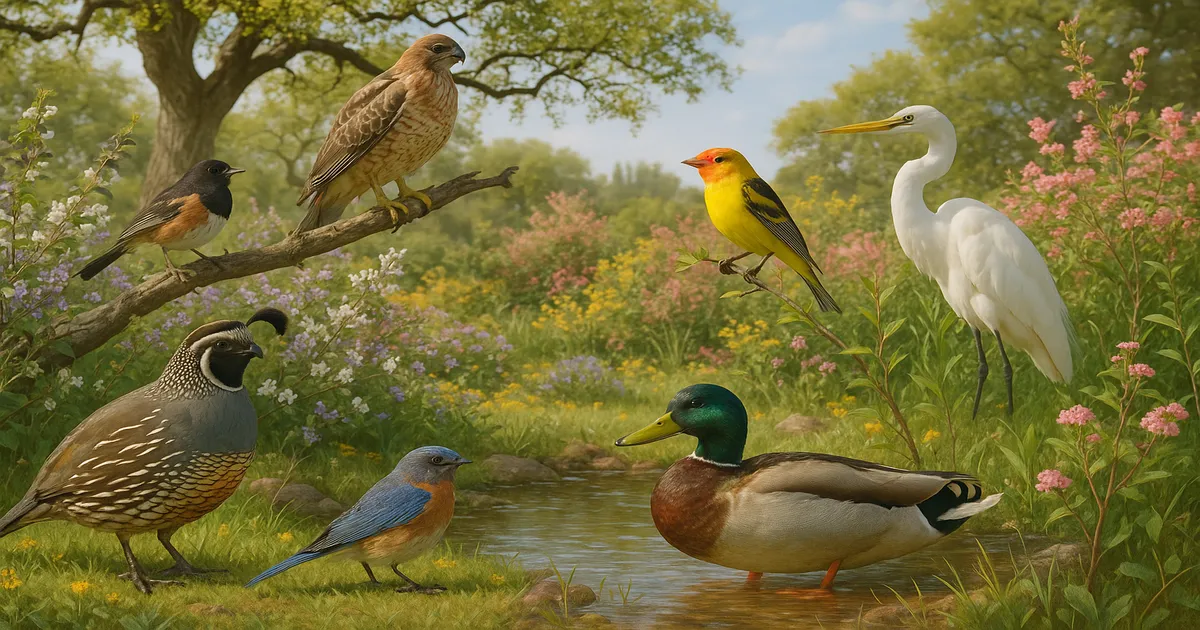
Quick Answer: If you’re asking “what is this bird?” in San Jose, California, you’re in good company — the city sits where the San Francisco Bay, the Diablo Range, and the Santa Cruz Mountains all converge, and that geography pulls in a remarkable variety of species. The birds most likely to have you reaching for your phone are Anna’s Hummingbird, Black Phoebe, Yellow-rumped Warbler, and House Finch. This guide covers the 12 species San Jose residents photograph and wonder about most, with ID tips, the best local spots, and advice for attracting them to your yard.
What Is This Bird? The 12 Most Common San Jose Species
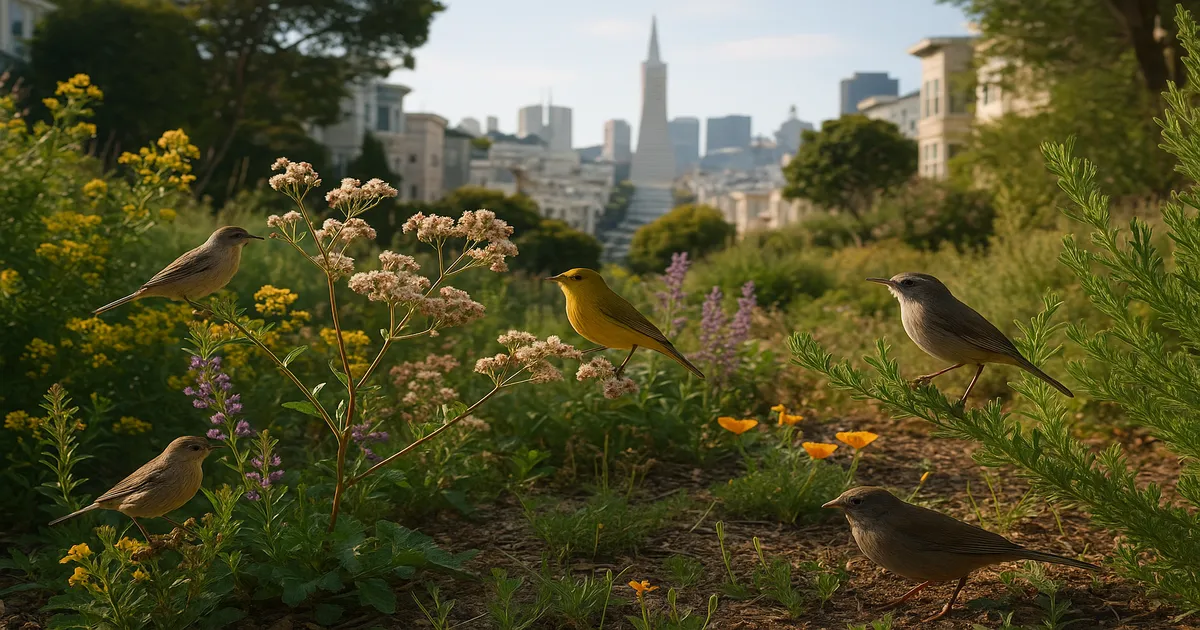
San Jose doesn’t get enough credit as a birding destination. The city sits at the southern end of San Francisco Bay, flanked by the oak-covered Diablo Range to the east and the redwood-and-conifer Santa Cruz Mountains to the west. Riparian corridors — Coyote Creek, Los Gatos Creek, the Guadalupe River — thread through the urban fabric like green highways for wildlife. The result is a city where you can watch a Great Blue Heron standing motionless in a shopping center drainage channel and a Cedar Waxwing stripping berries from a parking lot shrub, often on the same lunch break.
These are the birds San Jose residents photograph and search online most often:
- Anna’s Hummingbird (Calypte anna) — the rose-headed hummingbird at your feeder, year-round
- Black Phoebe (Sayornis nigricans) — the tail-pumping black-and-white bird near every creek
- Yellow-rumped Warbler (Setophaga coronata) — winter’s most abundant small bird, with a flash of yellow
- House Finch (Haemorhous mexicanus) — the raspberry-red feeder bird people mistake for something exotic
- Lesser Goldfinch (Spinus psaltria) — tiny, vivid yellow, and everywhere
- Spotted Towhee (Pipilo maculatus) — the dramatic ground-scratcher in leaf litter
- California Scrub-Jay (Aphelocoma californica) — bold, blue, loud, and crestless
- Dark-eyed Junco (Junco hyemalis) — the slate-gray winter ground bird with white tail flashes
- White-crowned Sparrow (Zonotrichia leucophrys) — bold black-and-white head stripes, abundant in winter
- Cedar Waxwing (Bombycilla cedrorum) — silky plumage, nomadic berry flocks
- American Kestrel (Falco sparverius) — North America’s smallest falcon, hovering over open fields
- Great Blue Heron (Ardea herodias) — the prehistoric-looking giant standing in every shallow waterway
Hummingbirds and Small Fliers
Anna’s Hummingbird: The Rose-Headed Year-Round Resident
Anna’s Hummingbird is the hummingbird in San Jose — not a seasonal visitor, but a permanent, territorial resident that starts nesting as early as December while most of the country is still frozen. Males sport a brilliant rose-red to magenta gorget (throat patch) that extends all the way up over the crown, which is unique among North American hummingbirds. In good light it’s electric; in shadow, it can look nearly black, which trips up a lot of people.
Females are green above and grayish-white below, with just a small central spot of rose-red on the throat. If you’re watching a hummingbird at your feeder that looks “plain,” it’s almost certainly a female Anna’s. The male’s song is a long, scratchy, buzzy series of chips and squeaks — surprisingly complex, and delivered year-round. Anna’s is the only hummingbird in North America known to sing a true song rather than just call.
At about 3.9 inches (10 cm) long and weighing roughly as much as a U.S. nickel, Anna’s are stockier than most hummingbirds, with a relatively large head and a medium-length straight bill.
How to tell Anna’s from other Bay Area hummingbirds:
| Species | Key Difference |
|---|---|
| Costa’s Hummingbird (Calypte costae) | Purple gorget with long pointed “whisker” flares; smaller; desert species, rare in San Jose |
| Rufous Hummingbird (Selasphorus rufus) | Rufous-orange flanks and back on males; passes through San Jose mainly July–October |
| Allen’s Hummingbird (Selasphorus sasin) | Green back on male (vs. rufous on Rufous); rare breeder in Bay Area foothills |
| Black-chinned Hummingbird (Archilochus alexandri) | Purple lower gorget band; white collar; thinner bill; uncommon in San Jose |
The rose-red crown extending over the top of the head is the single best mark. No other hummingbird you’ll realistically see in San Jose has that.
A nectar feeder with a 4:1 water-to-white-sugar solution will keep Anna’s coming back all year. Skip the red dye, honey, and artificial sweeteners — plain white sugar is all they need, and mold in a dirty feeder can kill them, so rinse it every two to three days.
Lesser Goldfinch: The Tiny Yellow Finch in Your Garden
The male Lesser Goldfinch’s vivid yellow underparts and black cap look almost tropical, which surprises a lot of beginners. It’s a year-round San Jose resident, partial to nyjer seed and native plants, and you’ll often hear its liquid, imitative call before you see it. At about 4.5 inches (11 cm), it’s one of the smallest finches in North America. A tube feeder loaded with nyjer seed is the fastest way to attract them. (Droll Yankees Onyx Clever Clean Finch Magnet)
Backyard Finches and Sparrows: Cracking the “Little Brown Job” Code
The streaky brown birds that frustrate new birders are actually some of the most interesting species once you learn the ID. San Jose has four that show up constantly.
House Finch: The Rosy-Headed Feeder Favorite
Male House Finches have a raspberry-red wash on the head, breast, and rump — not as intense as a cardinal, but vivid enough to stop you mid-scroll. Females are streaky brown with no red at all, which is why people often think they’re two different species at the feeder. Both sexes are year-round San Jose residents and are almost certainly present at any feeder stocked with black-oil sunflower seed.
Dark-eyed Junco: The Snowbird That Winters in San Jose
Dark-eyed Juncos are slate-gray above with a white belly, a pink bill, and — the best field mark — bright white outer tail feathers that flash when they fly. They’re ground-hoppers, constantly scratching around under shrubs and feeders. In San Jose, they arrive in October and most leave by April. A small breeding population does nest in the Santa Cruz Mountains above the city, but the birds you see in your yard in winter are almost certainly migrants from farther north.
White-crowned Sparrow: Bold Head Stripes Make ID Easy
The White-crowned Sparrow is one of the most beginner-friendly IDs in the region. Those bold black-and-white crown stripes are unmistakable, and the pinkish-orange bill is a nice supporting mark. They’re abundant from October through April, foraging in flocks on the ground in parks, gardens, and roadsides. Come May, they’re mostly gone to their northern and high-elevation breeding grounds.
Spotted Towhee: The Striking Ground Scratcher
The Spotted Towhee is a year-round resident and genuinely one of the most handsome birds in San Jose. Males have a jet-black hood, rufous flanks, white belly, and white spots scattered across the wings. They forage with a dramatic double-scratch — both feet kicking backward simultaneously through leaf litter — and they’re loud about it. Look for them in dense shrubby areas at Alum Rock Park and along any brushy trail edge.
Flycatchers, Jays, Waxwings, and Warblers
Black Phoebe: The Tail-Pumping Bird by Every Creek
Black Phoebe is one of San Jose’s most reliable birds, and once you know it, you’ll see it everywhere near water. Jet-black on the head, breast, back, and tail, with a sharply contrasting white belly — clean, graphic, impossible to confuse once you’ve seen it a few times. The constant downward tail-pumping while perched is the behavioral field mark that clinches it.
They’re classic flycatchers: perch on a low branch or rock near water, dart out to snag a flying insect, return to the same perch. Mud nests tucked under bridges and building eaves are a signature of this species, and pairs often return to the same site year after year. Coyote Creek, the Guadalupe River, and virtually every park pond in San Jose has at least one resident pair.
| Look-Alike | Key Difference |
|---|---|
| Say’s Phoebe (Sayornis saya) | Pale gray-brown above; peachy-orange belly; found in drier open habitats |
| Eastern Phoebe (Sayornis phoebe) | All brownish-gray, no sharp black-and-white contrast; extremely rare vagrant in California |
| Dark-eyed Junco | White outer tail feathers; pink bill; hops on ground; no tail pumping |
California Scrub-Jay: The Bold Blue Bird With No Crest
California Scrub-Jay is the blue jay of the Bay Area, and it is emphatically not shy. Bold blue-and-gray plumage, a loud harsh call, and a habit of showing up wherever food is available make it one of the most recognizable birds in any San Jose neighborhood. The crestless head is the key distinction from Steller’s Jay (Cyanocitta stelleri), which has a prominent black crest and tends to stay in denser conifer forest. If you see a blue jay-sized bird in your suburban backyard, it’s almost certainly a Scrub-Jay.
Cedar Waxwing: Silky Plumage and Berry-Eating Flocks
Cedar Waxwings are one of those birds that makes people stop and stare. The plumage is genuinely silky — smooth, blended browns and grays with a yellow-tipped tail, a black mask, and tiny red waxy tips on the secondary wing feathers. They travel in nomadic flocks, descending on berry-laden trees and stripping them clean before moving on. In San Jose, watch for them at Vasona Lake and anywhere toyon or ornamental fruit trees are fruiting, typically October through April.
Yellow-rumped Warbler: The Flash of Yellow That Saves the ID
The Yellow-rumped Warbler is San Jose’s most abundant winter warbler, and the yellow rump patch is exactly as diagnostic as the name suggests. In flight it flashes like a bright yellow signal — hard to miss even when the rest of the bird looks like a streaky brown mess in winter plumage. In San Jose, the Audubon’s subspecies (S. c. auduboni) dominates; it has a yellow throat. The Myrtle subspecies (S. c. coronata), less common here, has a white throat instead.
These birds are remarkably flexible foragers: gleaning insects from leaves, hawking flies in mid-air, eating berries, and occasionally visiting suet feeders. Look for them in almost every San Jose park from October through April, often in loose flocks moving through the canopy. A suet cage is the easiest way to pull them into your yard.
Raptors and Large Birds: San Jose’s Most Impressive Sightings
American Kestrel: North America’s Smallest Falcon
The American Kestrel is a falcon the size of a robin, and it’s gorgeous. Males have a rusty back and tail, blue-gray wings, and two bold vertical black “mustache” marks on a white face. They hunt by hovering in place over open grassland — wings beating rapidly, head perfectly still — before dropping on prey. Utility wires along open fields are prime perch spots.
Kestrel numbers have declined significantly across North America over the past few decades, and the South Bay is no exception. The causes aren’t fully understood but likely include habitat loss, pesticide use reducing insect prey, and competition for nest cavities. When you do see one, it’s worth a moment. Alviso Marina County Park and the open fields along the southern edges of the city are your best bets.
Great Blue Heron: The Prehistoric-Looking Giant of Bay Wetlands
There’s nothing subtle about a Great Blue Heron. Standing about 4.5 feet (1.4 m) tall with a wingspan reaching 6 feet (1.8 m), it’s the largest wading bird you’ll encounter in San Jose. Blue-gray plumage, a yellow dagger bill, and a slow, deliberate stalking gait in shallow water make it unmistakable. In flight, it folds its neck into an S-curve and produces a loud, hoarse squawk that sounds genuinely prehistoric.
Where to Find Each Bird in San Jose
Best Local Spots by Habitat
Urban parks and suburban gardens: Anna’s Hummingbird, House Finch, Lesser Goldfinch, California Scrub-Jay, and Spotted Towhee are all comfortable in suburban settings. Alum Rock Park is outstanding for all five, with oak woodland and chaparral within easy walking distance of the parking areas.
Riparian corridors: The creek trails are where San Jose birding really shines. Guadalupe River Park is reliable for Black Phoebe, Great Blue Heron, and Yellow-rumped Warbler. The Coyote Creek Trail is excellent for Black Phoebe, White-crowned Sparrow, and Dark-eyed Junco, especially in winter. Both corridors are accessible and productive even on a 30-minute walk.
Bay-edge marshes: Alviso Marina County Park is in a class of its own — Great Blue Heron, American Kestrel, and a rotating cast of shorebirds and waterfowl. It’s about 20 minutes from downtown San Jose and consistently delivers.
Oak woodlands and chaparral: The eastern hills accessed via Alum Rock Park offer the best oak woodland birding within city limits. Vasona Lake County Park in Los Gatos is a reliable spot for Cedar Waxwing and Lesser Goldfinch when the ornamental fruit trees are loaded.
Seasonal summary:
- Year-round: Anna’s Hummingbird, Black Phoebe, House Finch, Lesser Goldfinch, Spotted Towhee, California Scrub-Jay, Great Blue Heron
- Winter visitors (Oct–Apr): Yellow-rumped Warbler, Dark-eyed Junco, White-crowned Sparrow, Cedar Waxwing
- Variable/declining: American Kestrel (present year-round but increasingly scarce)
Attracting San Jose Birds to Your Yard
Native Plants That Draw the Most Birds
Skip the ornamentals and go native — the return on investment is dramatically better:
- Anna’s Hummingbird: Salvia spathacea (hummingbird sage), Epilobium canum (California fuchsia), Ribes sanguineum (red-flowering currant)
- Cedar Waxwing and Yellow-rumped Warbler: Toyon (Heteromeles arbutifolia) — a California native shrub that produces masses of red berries in winter precisely when these birds need them most
- Spotted Towhee and California Scrub-Jay: Native oaks (Quercus agrifolia, coast live oak) provide acorns, insects, and dense cover
Water Features: The Single Best Upgrade for Any Yard
If I had to pick one thing that attracts the most bird species to a yard, it’s moving water. A shallow birdbath with a small dripper or solar-powered agitator will bring in species that never touch a feeder — warblers, sparrows, thrushes, and waxwings. Keep it shallow (no more than 2 inches at the deepest point), clean it weekly, and position it near shrubs so birds have cover nearby.
Black Phoebe will sometimes perch nearby and hunt insects that come to drink. Adding moving water to a yard regularly doubles the species count within a season.
How to Identify Any Mystery Bird in San Jose
The Four Things to Note Before You Open an App
Train yourself to observe these four things in order:
- Size and shape — Is it sparrow-sized, robin-sized, or crow-sized? What’s the bill shape: thick and seed-cracking, thin and insect-probing, or hooked?
- Color pattern — Note the head, breast, wings, and rump separately. A yellow rump patch means Yellow-rumped Warbler. A rose-red crown means Anna’s Hummingbird.
- Behavior — Is it pumping its tail (phoebe)? Hovering (kestrel or hummingbird)? Double-scratching in leaf litter (towhee)?
- Habitat and location — A black-and-white bird near a creek is almost certainly a Black Phoebe. The same colors in a suburban yard in winter is more likely a Dark-eyed Junco.
Best Apps and Field Guides for San Jose Birding
Merlin Bird ID (free, Cornell Lab of Ornithology) is the fastest tool for a mystery bird — you can describe what you saw or use Sound ID to identify a bird by its call in real time. For a physical reference, the Sibley Guide to Birds covers every species you’ll encounter in San Jose with excellent comparison plates.
A decent pair of binoculars makes a bigger difference than any app. For suburban birding, 8x42 is the most versatile configuration — enough magnification to see field marks clearly, wide enough for a bright image in shaded riparian corridors. (Nikon Monarch M5 8x42)
Frequently Asked Questions: “What Is This Bird?” in San Jose
Q: What is the small bird with a red head at my feeder in San Jose? Almost certainly a male House Finch. The raspberry-red wash covers the head, breast, and rump. If the red is more intensely scarlet and concentrated on the face with a black mask, you might have a male House Finch in peak condition — but a true cardinal is extremely rare in the Bay Area. House Finch is by far the most likely answer.
Q: What is the black-and-white bird that bobs its tail near the creek? That’s a Black Phoebe. The constant downward tail-pumping while perched is the giveaway. It’s one of San Jose’s most reliable birds and is present year-round at virtually every creek, pond, and drainage channel in the city.
Q: What is the tiny hummingbird at my feeder — is it rare? Probably not. Anna’s Hummingbird is a year-round San Jose resident and the default hummingbird in the Bay Area. Males have a rose-red crown and throat; females are plain green and gray with a small red throat spot. If you’re seeing a hummingbird in San Jose in any month of the year, Anna’s is the overwhelming odds-on answer.
Q: What are the small yellow birds flocking in my neighborhood in winter? Two candidates: Yellow-rumped Warblers (look for the yellow rump patch when they fly) or Lesser Goldfinches (vivid yellow below, black cap on males, year-round residents). Both travel in loose flocks and can show up in numbers when food is available.
Q: What is the large gray bird standing motionless in the water? Great Blue Heron. At 4.5 feet tall with a 6-foot wingspan, it’s unmistakable once you’ve seen one. Common year-round along Coyote Creek, the Guadalupe River, Alviso Marina, and honestly any body of water in the city, including retention ponds and drainage ditches.