Quick Answer: Yes, you can identify a bird from a carcass — often to species level, sometimes to age and sex. Feathers, bill shape, foot anatomy, and body size all survive death and carry reliable taxonomic information. A fresh carcass yields the most data, but even degraded remains with intact flight feathers can usually be pinned to a family or species.
Finding a dead bird and wondering what it is — that’s exactly the kind of question that pulls people deeper into birding. “Is it possible to ID this bird carcass?” gets asked constantly, and the answer is a confident yes. Forensic ornithology isn’t just for researchers. With the right approach, you can work through a carcass the same way a museum curator would. The Smithsonian’s National Museum of Natural History has built a collection of over 640,000 bird specimens using exactly this method — and most of them started as dead birds someone picked up off the ground.
Here’s how to do it.
Can You Really ID a Bird Carcass?
Feathers are remarkably durable. Primary flight feathers can retain their color, barring, and iridescence long after the body has decomposed. Skeletal structures — bill shape, foot bones, wing proportions — are even more persistent. These are precisely the features taxonomists use to classify birds in the first place, so a carcass is, in many ways, just a specimen waiting to be read.
Fresh carcasses give you everything: plumage, soft tissue, stomach contents, even brood patches. But a sun-bleached wing found in a field can still tell you the family, and often the species.
What a dead bird can reveal:
- Species identity — usually achievable with intact flight feathers
- Sex — reliable in sexually dimorphic species like Northern Cardinal (Cardinalis cardinalis) or Ruby-throated Hummingbird (Archilochus colubris)
- Age — juvenile vs. adult clues visible in feather condition and, on fresh specimens, skull ossification
- Season of death — estimated from molt stage and feather wear
- Cause of death — often deducible from carcass condition and location
Reading Feathers and Plumage
Wing and Tail Feathers: Start Here
Primary and secondary flight feathers hold their pattern longer than any other part of the bird. Look for barring, iridescence, white patches, or contrasting tips. Most songbirds have exactly 12 tail feathers — count them if you can. Note the tail shape: forked (like a Barn Swallow, Hirundo rustica), squared, rounded, or graduated.
Iridescence often survives surprisingly well. The green-black gloss of a Common Grackle (Quiscalus quiscula) tail, for example, is usually still readable on a fresh carcass. So is banding on raptor tails. A good 10x hand lens helps enormously here — it’s the one tool I’d never leave home without when examining feathers. (Carson MagniGrip 10x Magnifier)
Body Feathers and Facial Markings
Don’t overlook the small stuff. Streaking on the breast, spotting on the back, a bold supercilium, an eye ring — these markings often persist on fresh to moderately fresh carcasses. Undertail coverts are a classic overlooked diagnostic: the bright yellow rump patch of a Yellow-rumped Warbler (Setophaga coronata) is unmistakable even when the rest of the bird is a mess. (Note: the yellow rump patch is technically on the uppertail coverts/lower back, but the undertail coverts are also yellow and worth checking.) Wing coverts can show wing bars, which are critical for warbler and vireo identification.
Iridescent gorgets on hummingbirds and speculum patches on ducks retain their structural color even after death, though the angle of light matters. Barring across the breast or back is one of the more stable patterns on body feathers. Heavy streaking on the breast points you toward sparrows, thrushes, or streaked warblers.
Using Molt and Feather Wear to Estimate Age and Season
Feather condition is a seasonal clock. Heavily worn, frayed primaries suggest a bird in late summer, just before its prebasic molt. Crisp, fresh feathers point to fall or winter. A bird showing a mix of retained juvenile feathers and newer formative or adult feathers is almost certainly a first-year bird in its first prebasic or prealternate molt.
On fresh carcasses, check for a brood patch — bare, vascularized skin on the belly used for incubation. Its presence confirms a breeding adult and tells you the bird died during nesting season.
Bill Shape, Foot Anatomy, and Body Size
Bill Shape as a Family-Level Clue
Bill shape is often the fastest way to place a bird in a family:
- Conical, thick: Finches, sparrows, grosbeaks — seed-crackers
- Thin, pointed: Warblers, vireos — insect gleaners
- Hooked tip: Raptors, shrikes
- Flat and wide with rictal bristles: Flycatchers, nightjars — aerial insectivores
- Long, straight, dagger-like: Herons, kingfishers
- Spatulate or lamellate: Ducks and other waterfowl
- Long and decurved: Curlews (Numenius spp.), ibises, some hummingbirds
Measuring the culmen — the top ridge of the bill from base to tip — can eliminate dozens of species at once. A culmen under 10 mm points to small passerines; over 100 mm and you’re looking at herons, curlews, or large shorebirds. Most field guides include culmen measurements in their species accounts. The Sibley Guide to Birds is particularly good for this.
Foot and Toe Arrangement
Feet are highly diagnostic and hold up well on carcasses:
- Anisodactyl (3 toes forward, 1 back): Most passerines
- Zygodactyl (2 forward, 2 back): Woodpeckers, owls, parrots, cuckoos
- Totipalmate (all 4 toes webbed): Pelicans, cormorants
- Palmate (3 front toes webbed): Ducks, gulls
- Raptorial talons: Large and curved; Great Horned Owl (Bubo virginianus) talons are disproportionately massive relative to body size
Leg color and scaling pattern often persist and can be diagnostic — the bright yellow legs of a Lesser Yellowlegs (Tringa flavipes) are hard to miss even on a degraded specimen.
Body Size Reference by Family
| Family | Typical Length | Typical Weight |
|---|---|---|
| Hummingbirds (Trochilidae) | 3–5 in (7.6–12.7 cm) | 0.07–0.21 oz (2–6 g) |
| Sparrows (Passerellidae) | 5–7 in (12.7–17.8 cm) | 0.5–1.4 oz (14–40 g) |
| Thrushes (Turdidae) | 6–10 in (15.2–25.4 cm) | 0.9–3.5 oz (25–100 g) |
| Crows/Ravens (Corvidae) | 17–27 in (43–68.6 cm) | 11–40 oz (312–1,134 g) |
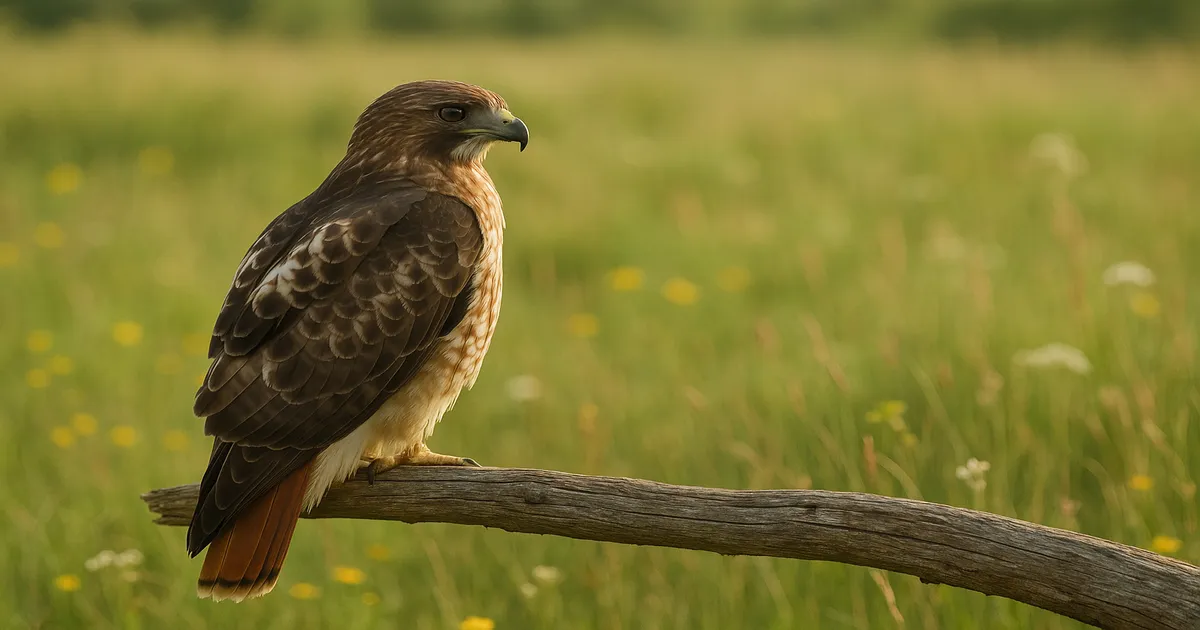
| Red-tailed Hawk (Buteo jamaicensis) | 18–26 in (45.7–66 cm) | 24–51 oz (680–1,446 g) |
| Great Horned Owl (Bubo virginianus) | 18–25 in (45.7–63.5 cm) | 32–88 oz (907–2,494 g) |
Using Habitat, Location, and Season to ID a Bird Carcass
Where You Found It Matters
Habitat context cuts your species list dramatically. A dead bird in a dense spruce forest in January is almost certainly not a shorebird. A small brown bird found above treeline in Colorado in July is very likely an American Pipit (Anthus rubescens) or Brown-capped Rosy-Finch (Leucosticte australis). Always note your GPS coordinates or write down a detailed habitat description when you find a carcass.
| Habitat | Species You’re Likely to Encounter |
|---|---|
| Suburban yards/feeders | House Sparrow (Passer domesticus), American Goldfinch (Spinus tristis), Mourning Dove (Zenaida macroura), Dark-eyed Junco (Junco hyemalis) |
| Eastern deciduous forest | Wood Thrush (Hylocichla mustelina), Ovenbird (Seiurus aurocapilla), Pileated Woodpecker (Dryocopus pileatus) |
| Western conifer forest | Steller’s Jay (Cyanocitta stelleri), Varied Thrush (Ixoreus naevius), Clark’s Nutcracker (Nucifraga columbiana) |
| Grasslands/prairies | Horned Lark (Eremophila alpestris), Western Meadowlark (Sturnella neglecta), Bobolink (Dolichonyx oryzivorus) |
| Wetlands/marshes | Red-winged Blackbird (Agelaius phoeniceus), Common Yellowthroat (Geothlypis trichas), American Bittern (Botaurus lentiginosus) |
| Coastal/shoreline | Sanderling (Calidris alba), Laughing Gull (Leucophaeus atricilla), Brown Pelican (Pelecanus occidentalis) |
| Open water | Common Loon (Gavia immer), Bufflehead (Bucephala albeola), Double-crested Cormorant (Nannopterum auritum) |
| Desert Southwest | Cactus Wren (Campylorhynchus brunneicapillus), Gambel’s Quail (Callipepla gambelii), Greater Roadrunner (Geococcyx californianus) |
Season and Migration as Filters
Time of year is a filter most people forget to apply. Spring migration (roughly late March–late May) means window strike victims are disproportionately warblers, vireos, tanagers, and orioles pushing north. Fall migration (August–November) is broader — juvenile birds in confusing plumages dominate, and shorebird diversity peaks in August and September.
Some winters bring irruption species south in unusual numbers: Snowy Owl (Bubo scandiacus), Pine Siskin (Spinus pinus), Common Redpoll (Acanthis flammea), and Bohemian Waxwing (Bombycilla garrulus) all move in varying cycles. If you find an unfamiliar small finch in January, check irruption species first.
Pull up eBird (ebird.org) and check the range map for any species you’re considering. If a species has zero records in your county in January, it’s probably not what you’re looking at. It takes about 30 seconds and saves a lot of second-guessing.
Cause of Death
Window Strikes
An estimated 600 million birds die from window strikes in the U.S. every year. If you find a dead bird beneath a window — especially during spring or fall migration — it’s almost certainly a migrant that hit the glass. These carcasses are often in good condition, which makes identification straightforward. Window collision deterrents like WindowAlert decals can dramatically reduce strikes if you’re finding birds regularly at the same window.
Cats, Raptors, and Roads
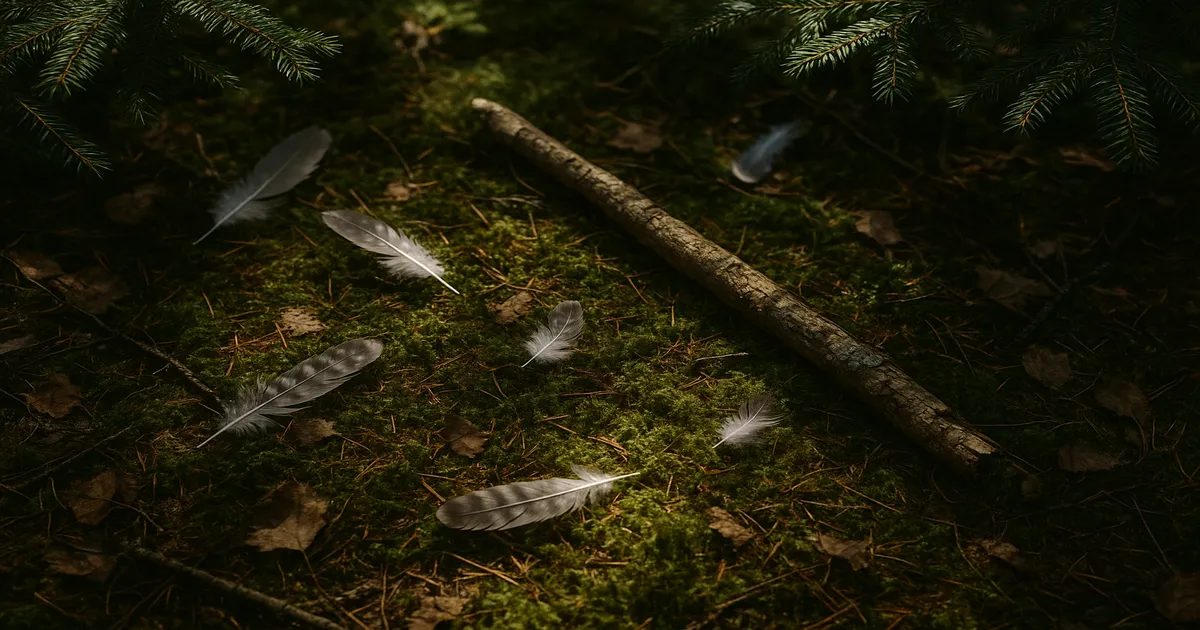
Cats kill an estimated 1.3–4 billion birds annually in the U.S. Cat-predated carcasses are often partially consumed, with feathers scattered in a rough radius. Raptor predation leaves a distinctive pluck pile — a cluster of feathers where the hawk or owl ate its meal, often with broken or stripped feather shafts. Vehicle collisions tend to produce intact but traumatized carcasses along roadsides, frequently raptors drawn to prey in road margins.
Disease and Poisoning
Electrocution takes larger birds — raptors, herons, corvids — found beneath power lines or transformers. Poisoning often shows up as multiple carcasses in one area. Disease is the scenario requiring the most caution: avian influenza and West Nile Virus can kill birds in clusters, especially waterfowl and corvids. Don’t handle these birds with bare hands. Report clusters to your state wildlife agency immediately.
Legal Considerations: What You Can and Cannot Do
The Migratory Bird Treaty Act
Most people don’t know this part. The Migratory Bird Treaty Act (MBTA) makes it illegal to possess most wild bird carcasses, feathers, or parts without a federal permit — even if you found the bird dead on your porch. You can observe and photograph freely; possession is not legal.
The exceptions are narrow: licensed researchers, wildlife rehabilitators, and accredited museums can legally receive salvaged specimens. If you think you’ve found something scientifically valuable, contact your state wildlife agency or a local natural history museum. They can arrange a legal transfer.
When to Report a Dead Bird
Most single dead birds don’t require a report, but these situations do:
- Multiple dead birds in one area → contact your state wildlife agency or USDA Wildlife Services
- Dead raptors or rare species → report to your state wildlife agency or the USGS Bird Banding Laboratory
- Window strike data → submit to the American Bird Conservancy’s Bird-Safe Building program
- Banded birds → report the band number to the USGS Bird Banding Laboratory at reportband.gov
If you’ve found something unusual — an out-of-range species, a banded bird, a raptor — contact a local natural history museum, university ornithology department, or your state wildlife agency. Licensed researchers can extract far more information than a field ID alone: DNA, toxicology, parasites, and stable isotopes that can reveal where the bird spent the previous winter.
Frequently Asked Questions
Can I ID a bird carcass from just a few feathers? Often yes, especially if you have flight feathers. A single primary or secondary feather can usually place a bird in a family; a distinctive pattern — like the white terminal spots on a Mourning Dove tail feather or the rufous-and-black pattern of a towhee — can get you to species. The Feather Atlas (featheratlas.usgs.gov) is a free, searchable database of scanned feathers from North American birds and is the best tool available for this.
Is it safe to handle a dead bird? Use disposable gloves or a plastic bag as a barrier, and wash your hands thoroughly afterward. Avoid handling birds that appear to have died from disease, especially if you find multiple carcasses in one area. Avian influenza is the main concern with waterfowl and shorebirds; West Nile Virus is the concern with corvids. When in doubt, don’t touch it — photograph it instead.
What’s the best way to photograph a bird carcass for ID help? Shoot in good natural light. Get photos of the spread wing (top and bottom), the tail, the bill from the side and front, the feet, and any distinctive body markings. Include something for scale — a coin, a ruler, your hand. Post to iNaturalist or the r/whatsthisbird subreddit with your location and the date; you’ll usually have an ID within a few hours.
Can I keep feathers I find on the ground? For most species, no. The MBTA protects feathers from migratory birds regardless of how they were obtained. Exceptions include feathers from non-native species (European Starling, House Sparrow, Rock Pigeon), domestic poultry, and legally hunted game birds. Raptor and songbird feathers found on the ground are not legal to keep without a permit, even accidentally.
What should I do if I find a banded bird? Note the band number, color, and which leg it’s on, then report it at reportband.gov. You’ll receive information about where and when the bird was banded, and your report contributes to long-term population data. It takes about five minutes and is genuinely useful to researchers.