Quick Answer: A snowy owl’s wings combined weigh an estimated 0.7–1.3 lbs (320–600 g), with each wing coming in around 0.35–0.65 lbs (160–300 g). This is a derived estimate — roughly 18–22% of total body weight — because ornithological literature doesn’t publish wing weight as a standalone measurement. The more revealing numbers are wingspan, wing area, and wing loading, which together explain why these birds fly the way they do.
How Much Do Snowy Owl Wings Weigh?
The Short Answer on Wing Weight
The snowy owl (Bubo scandiacus) is one of the heaviest owls in North America, weighing 3.5–6.6 lbs (1,600–3,000 g) depending on sex and condition. Based on comparative raptor anatomy — wing mass in large owls typically runs 18–22% of total body weight — both wings together likely weigh somewhere between 0.7 and 1.3 lbs (320–600 g). Each individual wing is probably in the range of 0.35–0.65 lbs (160–300 g).
That’s an estimate, not a figure from a peer-reviewed paper. Ornithologists don’t routinely weigh isolated wing structures. They focus on total body mass, wingspan, and wing loading — the measurements that actually predict how a bird flies. So if you want to know how much snowy owl wings weigh, the honest answer is: we can get close using body mass data, but the more interesting question is what those wings can do.
Why This Measurement Is Hard to Pin Down
A bird’s wing isn’t a discrete, removable object. It’s feathers, skin, muscle, bone, and connective tissue that grade seamlessly into the body. Published raptor morphometrics focus on wing loading and wing area because those figures have predictive value for flight performance. Wing weight in isolation doesn’t tell you much — which is probably why nobody publishes it.
Snowy Owl Size and Weight: The Full Picture
Total Body Weight and Dimensions
Snowy owls are genuinely heavy birds. Their weight range of 3.5–6.6 lbs (1,600–3,000 g) puts them at or near the top of North American owls by mass — heavier than most people expect when they see one sitting motionless on a fence post. Body length runs 20.5–27.9 inches (52–71 cm), roughly comparable to a Great Horned Owl (Bubo virginianus) in length, but snowy owls pack considerably more mass onto that frame.
Male vs. Female Size Differences
Here’s one that surprises a lot of birders: female snowy owls are significantly larger than males. Adult males typically weigh 3.5–4.4 lbs (1,600–2,000 g); females come in at 4.4–6.6 lbs (2,000–3,000 g). That’s not a small gap. This pattern — reverse sexual dimorphism — is common in raptors and in snowy owls is thought to relate to the female’s role in incubation and the different prey demands between the sexes during breeding season.
How Snowy Owls Compare to Other North American Owls
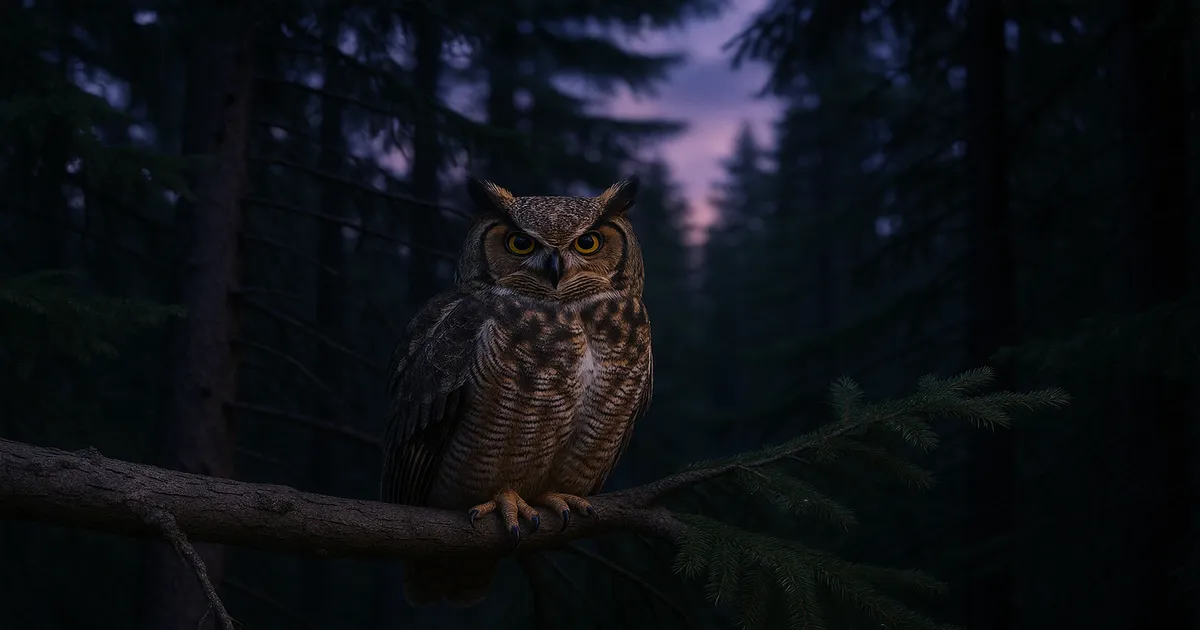
- Great Horned Owl: Similar body length, but lighter at 2.0–5.5 lbs (910–2,500 g) with a smaller wingspan
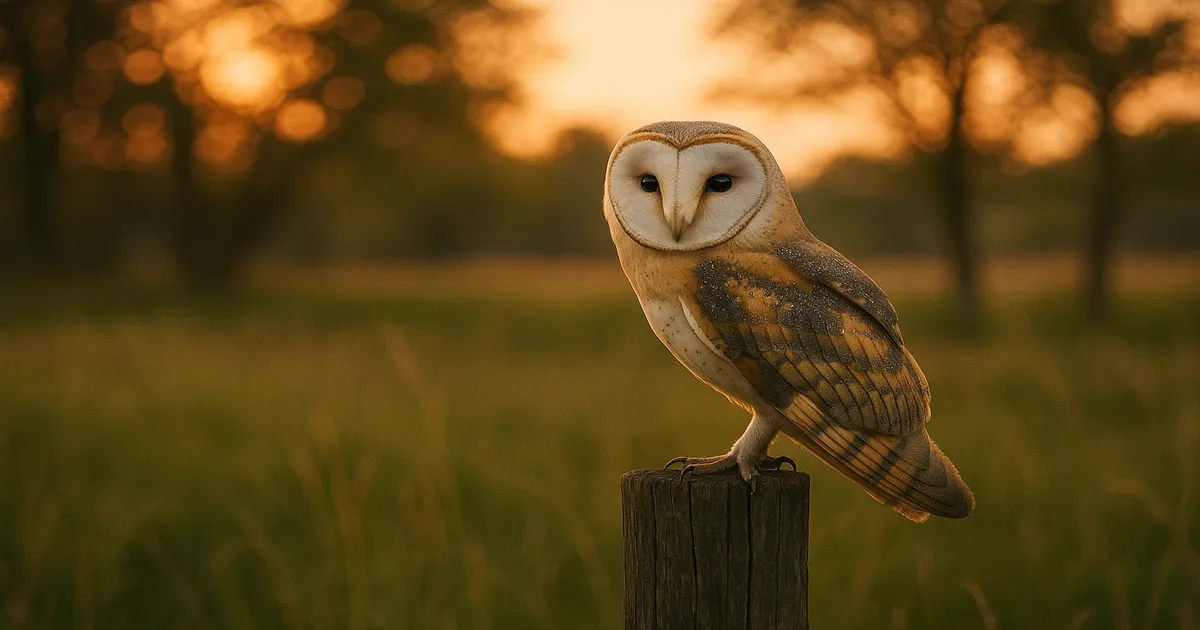
- Barn Owl (Tyto alba): Much smaller — 12.6–15.8 inches (32–40 cm) long, under 1.5 lbs (680 g); not in the same weight class
- Great Gray Owl (Strix nebulosa): Taller in appearance due to a large facial disc, but actually lighter than a snowy owl — it’s mostly feathers
The snowy owl is one of those rare cases where the bird is as massive as it looks.
Wingspan, Wing Area, and Wing Loading
Snowy Owl Wingspan
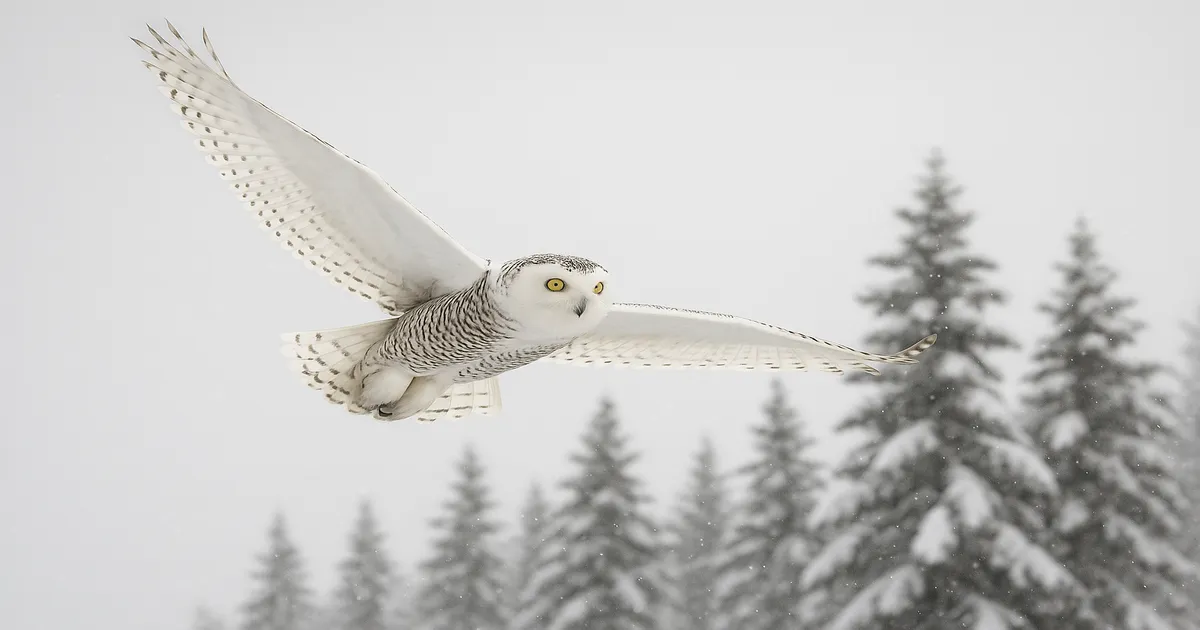
The wingspan stretches 49–57 inches (125–145 cm) — well over four feet from tip to tip. It’s among the largest wingspans of any owl in North America. Seeing one fully extended in low winter light is something you don’t forget quickly. A good pair of binoculars makes a real difference when you’re watching one work a distant field. (Vortex Optics Diamondback HD 8x42)
Wing Area
Wing area comes in at approximately 900–1,100 square inches (5,800–7,100 cm²). That’s substantial surface area relative to body mass, and it’s the foundation of everything interesting about how snowy owls move through the air.
How Much Do Snowy Owl Wings Weigh — and What Does Wing Loading Tell Us?
Wing loading is the ratio of body weight to wing area. High wing loading means a bird needs speed to stay aloft — think peregrine falcon. Low wing loading means the bird can fly slowly and still generate lift, which is enormously useful when you’re hunting unpredictable prey over open ground.
Snowy owls have a wing loading of approximately 0.4–0.6 oz per square inch (2.7–4.0 g/cm²), which is relatively low. The practical result: they can quarter a field at near-walking speed, hang almost motionless in a headwind, and adjust their approach with precision. For a bird hunting lemmings across featureless Arctic tundra — or voles across a Wisconsin cornfield in January — that controlled, buoyant flight is exactly what you need.
How Snowy Owls Hunt
Perch-and-Drop
Most of the time, a hunting snowy owl looks like it’s doing nothing. It sits on a fence post, a hay bale, or a low hummock and watches. Then it drops — a long, low-angled glide that covers ground fast and ends with both feet driving simultaneously into the target. The wings aren’t just for transport; that controlled glide is the weapon.
Coursing Flight
Snowy owls also hunt on the wing, flying low over fields and marshes in a buoyant, rocking flight that looks almost leisurely. I’ve watched them work a snow-covered agricultural field the same way a Northern Harrier (Circus hudsonius) works a marsh — back and forth, low and slow. The wingbeats appear unhurried, but these birds are deceptively fast when they commit to a strike.
Can Snowy Owls Hover?
Briefly, yes. Snowy owls can hold position over a spot by flying into the wind — though they’re not hovering specialists the way American Kestrels (Falco sparverius) are. It’s more of a sustained slow flight into a headwind, most useful when the owl has pinpointed prey beneath the snow and needs a moment to line up the strike.
One thing worth knowing: snowy owls are among the most diurnal owls in the world. On Arctic breeding grounds, there’s no real night in summer, so hunting in full daylight is the norm. Their behavior reflects this — they’re just as comfortable hunting at noon as at dusk.
Identifying a Snowy Owl: Key Field Marks
Plumage
Adult males are the ones that stop traffic — nearly pure white, sometimes with faint dark barring, occasionally almost completely white in older individuals. Adult females are white too, but with heavy dark brown horizontal barring across the breast, back, and wings. They are never fully white. Juveniles of both sexes are heavily barred and look quite dark overall. Young males whiten gradually with successive molts over several years; females retain more barring throughout their lives.
Aging and sexing snowy owls in the field is genuinely challenging. Experienced birders often hedge their calls, so don’t feel bad if you can’t nail it.
Eyes, Bill, and Facial Disc
The eyes are bright yellow and visible at impressive distances. Unlike most owls, the facial disc is relatively flat — the face reads as round and almost cat-like rather than the dramatic dish of a Barn Owl. The bill is short, strongly hooked, and largely hidden by white facial feathers.
A snowy owl’s eyes are fixed in the skull and can’t rotate. To compensate, the bird can rotate its entire head up to 270 degrees. Watch one tracking something and the head movement looks almost mechanical — fluid but precise.
Feathered Feet
The tarsal feathering extends all the way to the toes, giving snowy owls what looks like fluffy white boots. This is insulation against Arctic cold, where temperatures can drop to -40°F (-40°C). The talons themselves are large, black, and built to punch through snow and grip struggling prey.
A good spotting scope lets you appreciate these details at distance without disturbing the bird. (Celestron Regal M2 80ED)
Where and When to See a Snowy Owl
Breeding Range
Snowy owls breed on open Arctic tundra across northern Alaska and Canada — flat, low-vegetation terrain where lemmings are abundant and sightlines are long. They nest in simple ground scrapes on elevated hummocks, with clutch size directly tied to lemming availability. In a poor lemming year, many pairs simply don’t breed.
Wintering Habitat in the Lower 48
In winter, snowy owls push south into southern Canada and the northern United States, settling into habitats that mimic open tundra: agricultural fields, airports, coastal beaches, barrier islands, lake and ocean shorelines, and open marshes. They perch prominently — fence posts, utility poles, rooftops, open ground. If there’s a snowy owl in a field, you’ll usually spot it before you even raise your binoculars.
Irruption Years
Every few years, snowy owl numbers in the lower 48 surge dramatically. These irruption events were historically blamed on lemming crashes driving owls south in desperation, but research from Project SNOWstorm (projectsnowstorm.org) suggests the opposite may be true — productive breeding years send large numbers of young owls southward in search of territory. Either way, irruption years are when snowy owls turn up in places like Texas, Florida, and Oklahoma, and birding hotlines light up. The SNOWstorm website publishes GPS tracking data from tagged birds in near real time, and it’s worth bookmarking.
A quality field guide is useful for comparing snowy owls with similar species during irruption years when unusual sightings get reported. (Sibley’s Birds of North America)
Diet: Fueling a Heavy Bird
Lemmings
A single snowy owl can eat 3–5 lemmings per day — over 1,600 in a year. On Arctic breeding grounds, Brown Lemmings (Lemmus trimucronatus) and Collared Lemmings (Dicrostonyx torquatus) are the primary prey, and the entire breeding ecology of the species revolves around lemming cycles. Clutch size, breeding success, and irruption patterns all trace back to lemming abundance.
Winter Diet
Away from the Arctic, snowy owls eat whatever makes sense: meadow voles, rabbits, Norway rats, Ring-necked Pheasants (Phasianus colchicus), ducks, gulls, American Coots (Fulica americana), and other waterbirds. A large female snowy owl is a serious predator. They’ll steal prey from other raptors when the opportunity arises.
Diet can be reconstructed by analyzing pellets — the compacted bundles of fur, bone, and feathers that owls regurgitate after a meal. Pellet analysis is one of the primary tools researchers use to understand what snowy owls are actually eating across different regions.
Snowy Owl Conservation
IUCN Status
The snowy owl was uplisted to Vulnerable on the IUCN Red List in 2021, after revised population estimates painted a less optimistic picture than previously assumed. The global population is estimated at 28,000–100,000 individuals — a wide range that reflects how difficult it is to survey birds breeding across remote Arctic terrain. The trend is declining.
Key Threats
Climate change is the most serious long-term concern. Arctic warming is driving shrubification — the encroachment of shrubs into open tundra — which degrades nesting habitat. More immediately, changing snow conditions (freeze-thaw ice-crust events) can seal off the subnivean space that lemmings depend on, crashing lemming populations and cascading through snowy owl breeding success.
On wintering grounds, vehicle collisions are the leading documented cause of death, especially for young birds hunting along road margins. Secondary rodenticide poisoning — owls eating rodents killed by anticoagulant poisons — is a growing concern in agricultural and suburban areas. Illegal shooting still occurs despite legal protections.
How to Help
- Report sightings to eBird (ebird.org) — every record contributes to range and abundance data
- Join the Christmas Bird Count — winter owl counts are a key population monitoring tool
- Support Project SNOWstorm and follow their GPS-tagging research
- Keep your distance — if the bird looks at you, you’re too close; flushing a snowy owl repeatedly forces it to burn energy it needs to survive the winter
- Never offer food — it habituates owls to human presence, raises collision risk, and is illegal without permits in both the U.S. and Canada
A eBird-compatible app on your phone makes logging sightings fast and easy in the field. (Merlin Bird ID by Cornell Lab (free) paired with eBird Premium)
Frequently Asked Questions About Snowy Owl Wings and Size
How much do snowy owl wings weigh?
Each wing weighs an estimated 0.35–0.65 lbs (160–300 g), with both wings combined coming in around 0.7–1.3 lbs (320–600 g). This is derived from body mass data using typical raptor wing-mass ratios of 18–22%. Ornithologists don’t routinely publish wing weight as a standalone figure.
What is the wingspan of a snowy owl?
The wingspan ranges from 49 to 57 inches (125–145 cm) — over four feet from tip to tip. That broad wingspan, combined with relatively low body density per wing area, produces the characteristic buoyant, unhurried flight snowy owls are known for.
Are female snowy owls bigger than males?
Yes — significantly. Females weigh 4.4–6.6 lbs (2,000–3,000 g) compared to 3.5–4.4 lbs (1,600–2,000 g) for males. This reverse sexual dimorphism is common in raptors. Females are also more heavily barred in plumage, making the sexes fairly easy to distinguish in adult birds once you know what to look for.
How do snowy owl wings compare to other large owls?
Snowy owls have a wingspan comparable to Great Horned Owls but carry more body mass, giving them lower wing loading and more buoyant flight. Great Gray Owls have an impressive wingspan but are actually lighter — their bulk is largely feathers. Barn Owls are in a completely different size category.
Why do snowy owls have such large wings?
Large wings relative to body mass produce low wing loading, which allows slow, controlled flight — exactly what’s needed for hunting lemmings and voles across open tundra and fields. The ability to fly slowly, quarter back and forth, and adjust course in variable winds is more valuable to a snowy owl than speed. Wing size is a direct adaptation to open-country hunting in Arctic conditions.