Quick Answer: A chickadee nest cup measures roughly 1.5 to 2.5 inches (3.8–6.4 cm) across and about 1.5 to 2 inches (3.8–5.1 cm) deep — small enough to sit comfortably in one cupped hand. The entire nest mass typically spans 2.5 to 3.5 inches (6.4–8.9 cm) and sits inside a cavity the birds either excavate themselves or find ready-made.
If you’ve ever peeked inside a nest box and wondered whether that little bundle of moss and fur could really be a chickadee nest, the answer is almost certainly yes. Knowing how big a chickadee nest really is — and what goes into building it — changes how you look at these birds entirely. What seems like a casual backyard visitor turns out to be a surprisingly meticulous architect.
Meet the Chickadee: Species Overview
Black-Capped Chickadee: North America’s Most Familiar Species
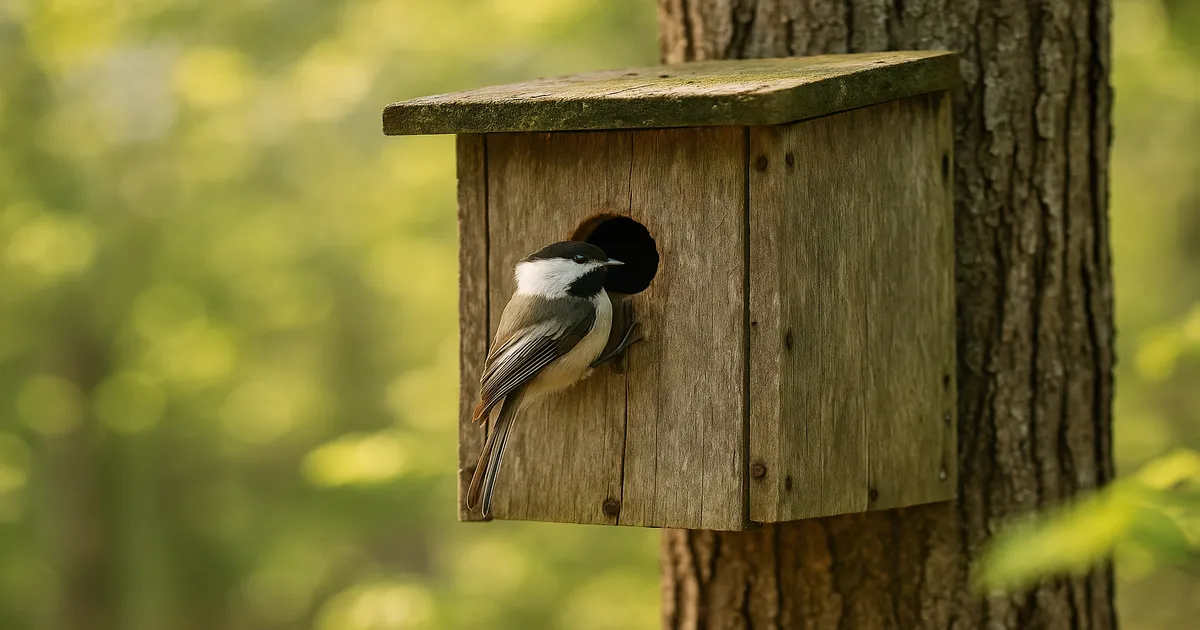
The Black-capped Chickadee (Poecile atricapillus) is the bird most North Americans picture when they hear “chickadee.” It runs 4.7 to 5.9 inches (12–15 cm) long and weighs roughly 9 to 14 grams — about the same as two nickels stacked together. Field marks are clean and unmistakable: jet-black cap, black bib, crisp white cheeks, gray back, and buffy flanks.
Males and females look identical in the field, which is unusual for a North American songbird. During breeding season, watch behavior instead: the male feeds the female and sings more persistently, which is the most reliable way to tell them apart.
Other Chickadee Species and How They Compare
North America hosts seven chickadee species. Here’s a quick look at how they stack up:
| Species | Size | Key Field Mark | Primary Range |
|---|---|---|---|
| Carolina Chickadee (Poecile carolinensis) | ~4.7 in (12 cm) | Nearly identical to Black-capped; less buffy flanks, smaller white wing edging | Southeastern U.S. |
| Mountain Chickadee (Poecile gambeli) | ~5.0 in (13 cm) | White supercilium through black cap | Western mountain ranges |
| Chestnut-backed Chickadee (Poecile rufescens) | ~4.7 in (12 cm) | Rich chestnut back and flanks | Pacific Coast and Cascades |
| Boreal Chickadee (Poecile hudsonicus) | ~5.5 in (14 cm) | Brown cap, rusty-brown flanks | Boreal forest across Canada |
| Gray-headed Chickadee (Poecile cinctus) | ~5.5 in (14 cm) | Gray-brown cap, large white cheek patch | Alaska and far northern Canada |
| Mexican Chickadee (Poecile sclateri) | ~5.1 in (13 cm) | Large black bib extending onto breast | Sky islands of AZ/NM into Mexico |
Putting Nest Size in Context
A bird that weighs as much as two nickels isn’t going to build a nest the size of a robin’s. The cup is sized precisely to cradle the female’s body during incubation — no bigger than it needs to be. Once you hold that weight in your hand, the compact dimensions make complete sense.
How Big Is a Chickadee Nest? Detailed Dimensions
Inner Cup Diameter and Depth
The functional heart of the nest — the cup where the eggs actually sit — is surprisingly tight:
- Inner cup diameter: 1.5 to 2.5 inches (3.8–6.4 cm)
- Inner cup depth: 1.5 to 2 inches (3.8–5.1 cm)
That’s roughly the size of a large egg cup or a small tangerine cut in half. The snug fit is intentional; it helps retain the female’s body heat during the 12 to 13 day incubation period.
Overall Nest Mass Size
The full nest structure — including the thick base layers of moss and fur — is larger than the cup alone, but still remarkably compact:
- Overall nest mass diameter: 2.5 to 3.5 inches (6.4–8.9 cm)
- Overall nest mass height: 1.5 to 3 inches (3.8–7.6 cm)
The whole thing fits easily in one cupped hand. Decommissioned chickadee nests feel almost felted when you hold them — dense and tightly woven in a way that surprises most people.
Cavity Entrance Hole and Depth
The nest sits inside a cavity, so those dimensions matter too:
- Entrance hole diameter: ~1.125 inches (2.9 cm)
- Cavity depth: 4 to 9 inches (10–23 cm) below the entrance
- Nest height above ground: typically 4 to 15 feet (1.2–4.6 m), occasionally up to 30 feet (9 m)
How Chickadee Nest Size Compares to Other Backyard Birds
| Species | Inner Cup Diameter | Nest Height Above Ground |
|---|---|---|
| Black-capped Chickadee | 1.5–2.5 in (3.8–6.4 cm) | 4–15 ft (1.2–4.6 m) |
| House Wren (Troglodytes aedon) | ~2 in (5 cm) | 4–10 ft (1.2–3 m) |
| American Robin (Turdus migratorius) | ~4 in (10 cm) | 5–25 ft (1.5–7.6 m) |
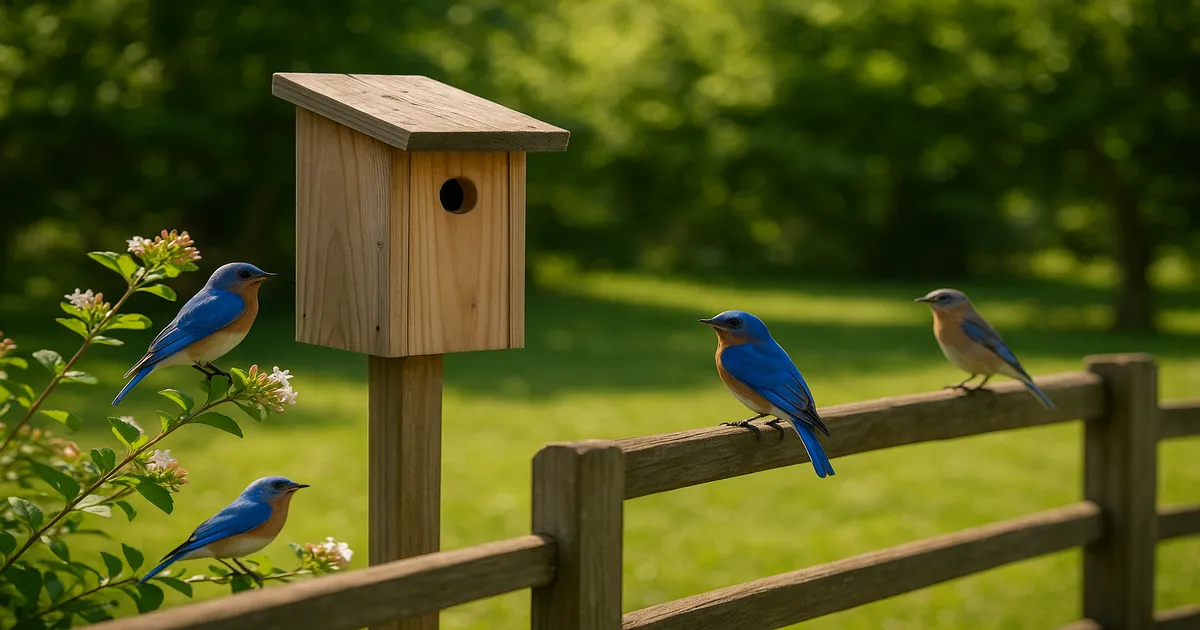
| Eastern Bluebird (Sialia sialis) | ~2.5 in (6.4 cm) | 3–20 ft (0.9–6 m) |
A robin’s cup is nearly twice as wide. The chickadee’s cavity-nesting strategy lets it get away with a much smaller, more thermally efficient structure.
What Is a Chickadee Nest Made Of?
The Base Layer: Moss and Coarse Plant Fibers
The foundation is almost always a thick pad of moss — hair-cap moss (Polytrichum spp.) is especially common. This layer can be an inch or two (2.5–5 cm) deep on its own, providing both insulation and a stable platform. It’s the structural skeleton of the whole construction.
The Middle Layer: Fur, Down, and Spider Silk
On top of the moss, the female weaves in an insulating mix of mammal fur (rabbit, deer, vole), plant down (cattail fluff, milkweed silk, thistle down), and spider silk. That silk runs throughout the nest as a flexible binding agent — it lets the structure stretch slightly rather than crack when the cavity heats and cools through the day.
The Inner Cup Lining
The innermost layer — where the eggs and nestlings will rest — is lined with the finest materials the birds can find: soft mammal fur, feathers, plant down, and insect cocoon silk. A vacated chickadee nest still feels almost impossibly soft weeks after the birds have gone.
The Nest Plug: A Behavior Most People Have Never Heard Of
When the female leaves the nest during incubation, she pulls a mat of fur or plant down over the eggs like a blanket. This “nest plug” retains heat in the cup and conceals the eggs from any predator that might peer into the cavity. It’s a small behavior with a big payoff, and it’s one of the things that makes chickadee nesting biology genuinely worth paying attention to.
How Chickadees Build Their Nests
Excavating Their Own Cavities
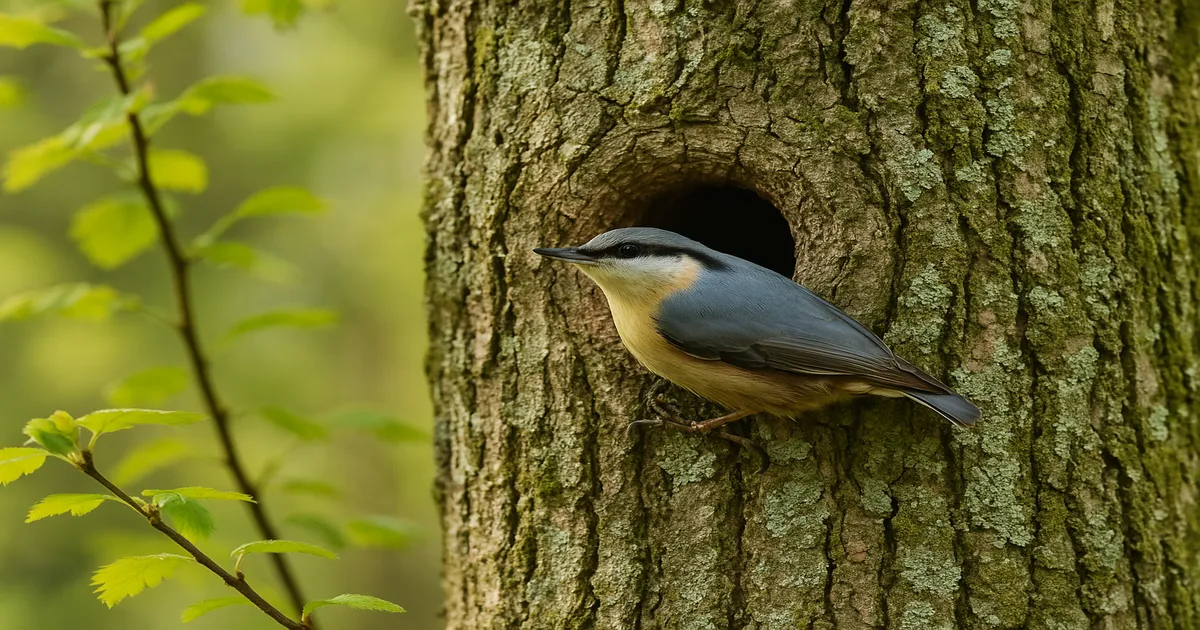
Black-capped Chickadees don’t just find cavities — they make them. The pair targets soft, rotting wood in dead snags or dead branches, chipping away with their stout bills until the cavity is deep enough. Birch snags are a particular favorite. One telling detail: they carry the wood chips away from the site rather than dropping them at the base of the tree, leaving fewer clues for predators.
Preferred Nest Sites
Chickadees favor forest edges and open woodland over dense interior forest — edges offer more foraging opportunities and more snag diversity. Beyond birch, they’ll excavate in alder, willow, and other soft-wooded species. They’ll also move readily into natural cavities, old woodpecker holes, and nest boxes when those are available and correctly sized.
Construction Timeline
Nest building takes roughly 4 to 8 days. The female does most of the actual construction; the male accompanies her on material-gathering trips and may bring some nesting material, but she’s running the project. Pair bonds start forming in February and March, with excavation typically running from late March through May depending on latitude. Egg laying peaks in May across much of the range.
Chickadee Eggs, Clutch Size, and Nesting Season
A typical clutch contains 6 to 8 eggs, though anywhere from 1 to 13 has been recorded (larger clutches usually mean two females used the same nest). The eggs are white with fine reddish-brown spots clustered toward the larger end, and each measures about 0.6 × 0.5 inches (15 × 12 mm) — small enough to fit on your thumbnail.
The female incubates alone for 12 to 13 days while the male brings her food. After hatching, nestlings stay in the cavity for 16 to 19 days, then take another 3 to 4 weeks to become fully independent. Most pairs raise one brood per year. Second broods happen occasionally, but given the energy cost of excavating a cavity and raising 6 to 8 chicks, one successful brood is a solid season.
Attracting Chickadees with Nest Boxes
How Big Should a Chickadee Nest Box Be?
Getting the dimensions right matters far more than the box’s looks:
- Entrance hole: 1.125 inches (2.9 cm) in diameter
- Interior floor: 4 × 4 inches (10 × 10 cm)
- Interior depth (floor to bottom of entrance hole): 8 to 10 inches (20–25 cm)
- Mounting height: 4 to 15 feet (1.2–4.6 m)
A simple cedar or pine box works perfectly well — nothing fancy required. The Stokes Select Chickadee House is a solid off-the-shelf option that ships with the correct entrance diameter already drilled.
Why the 1.125-Inch Entrance Hole Matters
That precise entrance diameter is the single most important spec on the whole box. A hole any larger — 1.25 inches or more — opens the door to House Sparrows (Passer domesticus) and European Starlings (Sturnus vulgaris), both of which will aggressively displace chickadees. Don’t round up. Use a hole saw bit sized correctly for the job — a Spyder 1-1/8 inch Rapid Core Eject Hole Saw cuts a clean hole with minimal tearout on cedar or pine.
Placement and Orientation
Mount the box on a post or tree trunk at 4 to 15 feet, near a forest edge or a yard with mature trees. Face the entrance away from prevailing winds — in most of North America that means avoiding a west-facing entrance — and out of direct afternoon sun. A slight forward tilt of a few degrees helps rain drain away from the hole.
Should You Add Wood Shavings?
Yes. Fill the box with untreated wood shavings before the season starts. Chickadees have a strong instinct to excavate, and giving them something to dig out makes the box feel like a natural cavity. Skip sawdust — it compacts and gets dusty. Coarse wood shavings are the right call.
Chickadee Behavior Worth Knowing
Winter Flocking and Caching
Outside of breeding season, chickadees form stable winter flocks of 6 to 12 birds with a strict linear dominance hierarchy — older males at the top, juveniles at the bottom. Higher-ranking birds get first access to feeders, which explains why you’ll sometimes see one chickadee chase another away from what looks like a perfectly adequate seed supply.
The caching behavior is extraordinary. Individual birds store tens of thousands of food items each fall — seeds, insect eggs, small caterpillars — tucked into bark crevices and under lichen across their winter territory. Their hippocampus, the brain region tied to spatial memory, actually grows in volume each autumn to handle the load. On the coldest nights, they drop their body temperature by up to 22°F (12°C) in a controlled hypothermia to conserve energy. For a bird that weighs two nickels, that’s the difference between surviving a Minnesota January and not.
Keeping a feeder stocked through winter with black-oil sunflower seed gives your local flock a reliable energy source during the hardest stretches of cold.
The Chick-a-Dee Call
The iconic chick-a-dee-dee-dee call is more than a name — it’s an alarm system. The number of “dee” notes encodes predator threat level. A small, agile predator like a Northern Pygmy-Owl (Glaucidium gnoma) — which can actually catch a chickadee in flight — triggers a long string of notes. A large, slow-moving hawk gets fewer. Other species in the mixed winter flock respond accordingly. It’s one of the more sophisticated communication systems documented in a North American songbird, and once you know it, you’ll never hear that call the same way again.
Frequently Asked Questions About Chickadee Nests
How big is a chickadee nest cup compared to the bird itself?
The inner cup diameter of 1.5 to 2.5 inches (3.8–6.4 cm) is only slightly wider than the bird’s body. That snug fit is deliberate — the female’s body covers the eggs almost completely during incubation, maximizing heat retention. It’s a remarkably efficient use of space for a bird weighing less than half an ounce.
What size hole does a chickadee need for a nest box?
Exactly 1.125 inches (2.9 cm). That diameter is large enough for a chickadee to pass through comfortably but small enough to exclude House Sparrows and European Starlings, which will take over a box if given the chance.
How many eggs does a chickadee lay?
A typical clutch is 6 to 8 eggs, though the recorded range runs from 1 to 13. The eggs are white with fine reddish-brown spots and measure about 0.6 × 0.5 inches (15 × 12 mm). The female incubates alone for 12 to 13 days.
How long does it take a chickadee to build a nest?
Construction typically takes 4 to 8 days. The female does most of the building, weaving together moss, fur, plant down, and spider silk in distinct layers. The male accompanies her on material-gathering trips and may contribute some materials, but she’s the primary builder.
What materials do chickadees use to line their nests?
The innermost cup is lined with the softest materials the birds can find — fine mammal fur (rabbit, vole, and deer hair are common), plant down like cattail fluff or milkweed silk, feathers, and insect cocoon silk. Spider silk is woven throughout the entire nest as a flexible binding agent, giving the structure both softness and resilience.